News Story
In the lead up to Once Upon A Time in Sokoto going on tour, as the first production from Touring Together – a new national touring initiative led by China Plate and Fuel – we are delighted to announce Dan Glazebrook as the Local Engagement Specialist at Oxford Playhouse, connecting communities to the play and the Touring Together programme.
Dan Glazebrook has over twenty years experience as an educator, author, journalist, community organiser and lyricist and holds a masters’ degree in International Relations. He was born and raised in Oxford, and where he returned to start a family fifteen years ago. He taught at a local school for ten years and organises regular free public education events on decolonial history and politics in collaboration with grassroots community groups. He has created a walking tour on Oxford’s imperial history, regularly reviews music and theatrical productions in the city and has been closely involved in the campaign to defend a local nature reserve against encroachment from nearby developments.
Tell us a little about yourself and your connection to Oxford.
I was born and raised in South Oxford and moved back here fifteen years ago to start a family. Since then I have worked as a teacher and writer, and have been particularly involved in community education in recent years. I am also peripherally involved in the Oxford music scene and have played in various bands over the years, as a frontman, lyricist and percussionist. I currently work as a tour guide and have my own tours looking at aspects of Oxford’s imperial history and present, as well as its role in anti-colonial resistance and solidarity.
What drew you to becoming involved in Touring Together and, this first year, on Once Upon a Time in Sokoto?
I was very excited by the Touring Together project as it combines two of my main interests - live performance/theatre and community organising. I have been writing music and theatre reviews for many years, which has allowed me to attend many performances I would not normally have been able to afford. I have often thought it is a shame that so many amazing cultural productions are effectively out of reach to so much of the population. The Touring Together project seems to be a sincere attempt to reach out beyond this typical audience and engage with communities usually excluded from or marginalised in spaces such as theatre, such as working class youth and global majority communities more generally. And the play itself is an exceptional piece of work, bringing to life complex aspects of pre-colonial African history through a riveting plot. I am very excited to be involved in bringing this incredible play to a wider audience.
What excites you most about bringing this production to audiences in Oxford?
I know how inspiring and thought-provoking live theatre can be, and this production in particular brings together so many interesting themes and genres, including spoken word lyricism, drama (obviously!), history, inter-faith dialogue, and gender relations, but in a way that brings all these things to life without being at all preachy or over-simplified. It is a great way of opening up challenging but important and interesting conversations, as well as demonstrating the potential and power of live performance. I am particularly excited about the workshops, discussions and poetry slam event we are organising around the play, to make the most of the potential opened up by the play.
What makes your local community unique, and what stories or conversations do you think are important here right now?
Oxford’s large multiethnic working class community is in many ways typical of any English city, with large numbers of local residents with South Asian, Caribbean, Irish, Welsh and more recently African, Eastern European and East Timorese heritage.
What is perhaps unique is that the city of Oxford is defined by its relationship to its two universities, and particularly the University of Oxford, which is inevitably a part of the conversation we need to have about the story of Europe's colonial heritage, as well as being one of the city's largest landowners. Nationally, Britain's colonial heritage is an important conversation, and the erasure of indigenous histories and cultures by British colonialists in the 1800s is the subject of Inua Ellams' play, Once Upon a Time in Sokoto coming to Oxford Playhouse in October, as part of Touring Together. At a local level, one of the most important conversations to be had is around the loss of public spaces - Community spaces are being lost due to the economic pressures on the city to maximise the commercial value of its every asset. The arts are an opportunity for us to hold these conversations, together in a shared public space, which feels important for communities in the city right now.
What would you say to someone who doesn’t usually go to the theatre about why they should come and experience Once Upon a Time in Sokoto?
I would say that they should seize the opportunity to see a performance that is truly accessible, both in terms of content and affordability. Dramatic storytelling is as old as culture itself, and has a rich history in working class communities across the world, from the minstrels of England to the griots of West Africa.
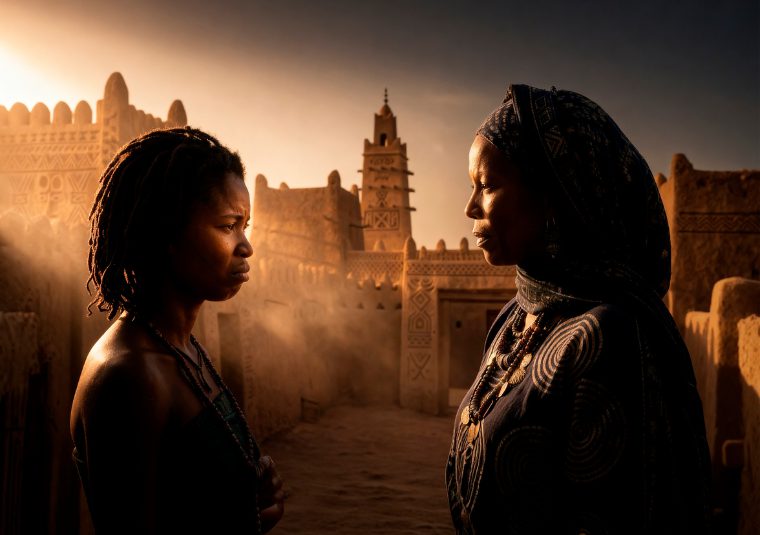
Once Upon a Time in Sokoto | Fuel in association with Touring Together
Our Local Engagement Specialists are looking to connect with schools, youth groups, community centres and grassroots organisations, including societies, clubs & collectives.